Instituto para os Direitos das Pessoas com Deficiência, I.P.
Planeamento, Coordenação e Execução das Políticas Nacionais destinadas à promoção dos direitos das Pessoas com deficiência

Concurso “Escola Alerta!” 2026/2027 | Convite à participação
O Instituto para os Direitos das Pessoas com Deficiência, I.P. (IDiPD), convida à participação no Concurso “Escola Alerta!” 2026/2027. A iniciativa dirige-se aos estabelecimentos de educação e ensino com crianças e alunos da Educação Pré-Escolar e dos Ensinos Básico e Secundário, desafiando a comunidade educativa a desenvolver projetos que promovam a inclusão, a acessibilidade e os direitos das pessoas com deficiência. Para saber mais sobre o concurso, consultar o aviso de abertura, o regulamento, os prazos e demais informações, visite a página: Prémio Concurso Escola Alerta! Agradecemos a divulgação desta informação junto de docentes, alunos e restantes elementos da comunidade educativa.
Ver detalhes do destaque Instituto para os Direitos das Pessoas com Deficiência, I.P., participa na abertura do Mestrado em Atividade Física para Pessoas com Deficiência para Pessoas com Deficiência da Universidade de Leiria e Oeste
O Instituto para os Direitos das Pessoas com Deficiência, I.P., (IDiPD) esteve representado na sessão de abertura do primeiro Mestrado em Atividade Física para Pessoas com Deficiência para Pessoas com Deficiência da recém-criada Universidade de Leiria e Oeste, realizada na passada sexta-feira, dia 18, na cidade de Leiria. A sessão foi presidida pelo Diretor da Escola de Educação e Ciências Sociais, Professor Doutor José Marques e pelo Diretor do Mestrado, Professor Doutor Raul Antunes e contou ainda com a presença do Presidente do Comité Paralímpico de Portugal e do Professor Doutor Alexandre Mestre, especialista em Direito Desportivo. Em representação do IDIPD interveio Odete Fiúza, que apresentou a atuação do Instituto na área do desporto, que se traduz, designadamente, no apoio e financiamento de medidas, programas e iniciativas destinadas à promoção da prática desportiva das pessoas com deficiência. Na intervenção foi sublinhado que a prática desportiva é um instrumento estruturante de inclusão, de autonomização e de participação plena na sociedade. Enquanto leiriense e pessoa com deficiência visual, Odete Fiúza partilhou ainda o seu percurso de inclusão, destacando o papel fundamental da família na partilha de responsabilidades e no envolvimento de todos nas atividades do dia a dia, o papel da escola na inclusão social e a importância da comunidade enquanto rede de suporte na qual, como referiu, «ninguém fica para trás e todos avançam puxando uns pelos outros.»
Ver detalhes do destaque 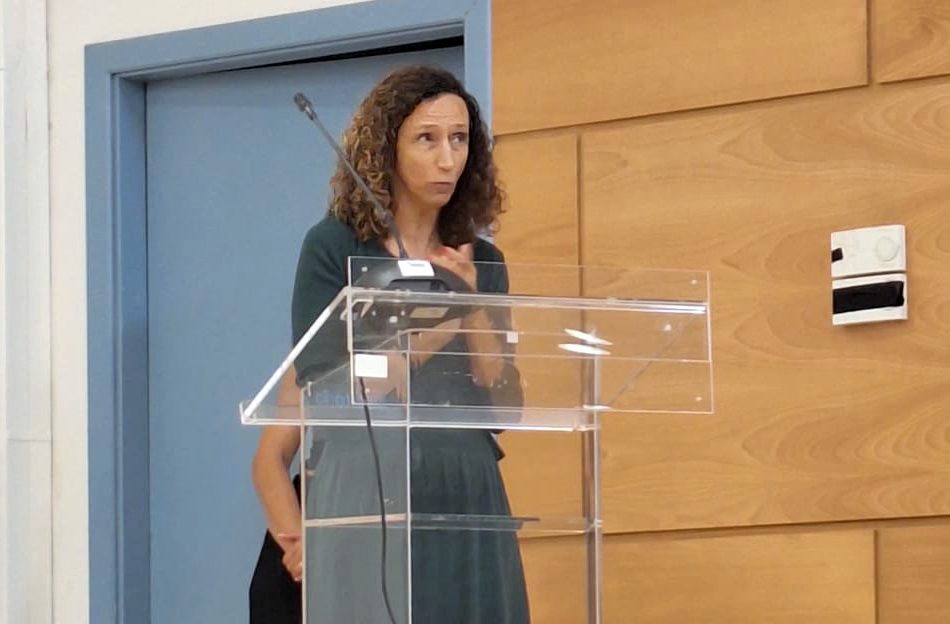
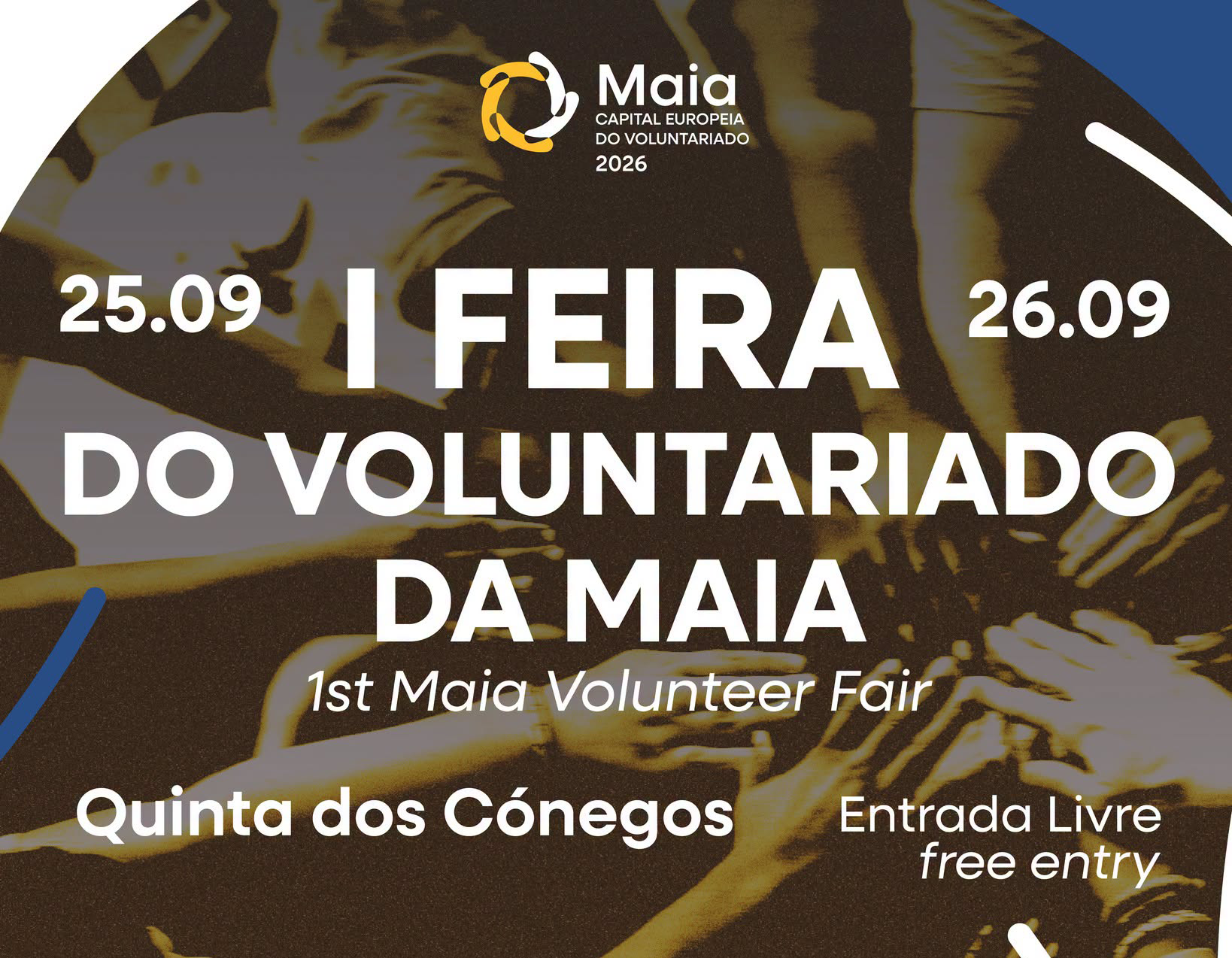
IDiPD, I.P. apresenta guia para um voluntariado mais inclusivo na I Feira de Voluntariado da Maia
O Instituto para os Direitos das Pessoas com Deficiência, I.P. (IDiPD, I.P.) e a Pista Mágica apresentam, no dia 25 de setembro, a publicação As Pessoas com Deficiência como Voluntárias – Guia para um voluntariado mais inclusivo , no âmbito da I Feira de Voluntariado da Maia. A apresentação terá lugar entre as 16h10 e as 16h40, na Zona 1, integrada na temática “Histórias que abraçam”. Desenvolvido conjuntamente pelas duas organizações, o guia resulta de um percurso de colaboração iniciado há quatro anos, por ocasião do projeto VolunTalento, e constitui uma ferramenta orientadora para a promoção de programas de voluntariado mais inclusivos. A publicação pretende contribuir para a identificação e eliminação de barreiras à participação das pessoas com deficiência em contextos de voluntariado, promovendo a sua capacitação e participação plena e ativa na sociedade. A I Feira de Voluntariado da Maia decorre nos dias 25 e 26 de setembro, na Quinta dos Cónegos, integrando a programação da Maia - Capital Europeia do Voluntariado 2026. A iniciativa reúne organizações, associações e entidades ligadas ao voluntariado, com uma programação que inclui momentos de partilha, workshops, mesas-redondas e outras atividades. O IDiPD. I.P. convida todas as pessoas interessadas a participar nesta iniciativa e a conhecer diferentes projetos e oportunidades de voluntariado, contribuindo para uma sociedade mais participativa e inclusiva. A publicação do guia decorre ainda num ano particularmente significativo para o voluntariado, em que as Nações Unidas proclamaram 2026 como Ano Internacional dos Voluntários para o Desenvolvimento Sustentável. Consulte o programa da I Feira de Voluntariado da Maia AQUI Conheça o guia As Pessoas com Deficiência como Voluntárias – Guia para um voluntariado mais inclusivo [ link para a notícia sobre o guia no website do IDiPD, I.P .].
Ver detalhes do destaque Dia Municipal para a Igualdade - Sessão de Esclarecimento e Capacitação
No próximo dia 29 de setembro de 2026, terça-feira, das 15h00 às 17h00, será realizada uma Sessão de Esclarecimento e Capacitação , com o objetivo de apresentar a iniciativa, esclarecer dúvidas sobre a participação e a inscrição na Agenda Nacional. Será também realizada uma sessão de capacitação pela CIG, CITE e IDiPD, com o objetivo de apresentar alguns dados e conceitos relacionados com os selos da iniciativa do Dia Municipal para a Igualdade 2026. Programa: 15h00 | Sessão de Abertura Boas-vindas pela Comissão Organizadora Apresentação dos objetivos da iniciativa e da Agenda do Dia Municipal para a Igualdade 15h10 – 15h45 | Sessão de Capacitação CIG - Comissão para a Cidadania e a Igualdade de Género CITE - Comissão para a Igualdade no Trabalho e no Emprego IDiPD - Instituto para os Direitos das Pessoas com Deficiência 15h45 – 16h45 | Mesa-Redonda Moderação Sandy Gageiro As Estratégias Territoriais de Promoção da Igualdade e o Dia Municipal para a Igualdade ACEESA – Associação Centro de Estudos de Economia Solidária do Atlântico PpDM – Plataforma Portuguesa para os Direitos das Mulheres ADM Estrela - Associação Social e Desenvolvimento Câmara Municipal de Ponta Delgada Câmara Municipal de Lisboa Câmara Municipal da Guarda CooLabora - Intervenção Social A participação requer inscrição prévia obrigatória através do Zoom . ➡️ Inscrições Aqui Consulte o Cartaz do evento Aqui
Ver detalhes do destaque 
Semana Internacional das Pessoas Surdas - Setembro Azul
A Semana Internacional das Pessoas Surdas é uma iniciativa internacional que celebra a identidade, a cultura e os direitos da Comunidade Surda. Em 2026, a Federação Mundial de Surdos (WFD – World Federation of the Deaf) designa como tema ‘Declaring Deaf People’s Human Rights' (Declarar os Direitos Humanos das Pessoas Surdas). Saiba mais informações, em: https://wfdeaf.org/international-week-of-deaf-people-2026/ O mês de setembro é também conhecido como Setembro Azul. A cor azul associada à Comunidade Surda deriva de um símbolo herdado da Segunda Guerra Mundial, em que as pessoas com deficiência eram identificadas com faixas azuis pelos nazis. Atualmente, o azul associado ao mês de setembro ganhou um novo sentido para a Comunidade Surda, representando a defesa dos direitos e da plena participação social. Internacionalmente destacam-se datas históricas relevantes durante o mês de setembro, às quais Portugal se associa com comemorações próprias: 6 a 11 de setembro: Congresso de Milão (1880), que proibiu o uso das Línguas Gestuais na educação de pessoas surdas. 11 de setembro: Dia da Opressão das Línguas Gestuais. 20 de setembro: Dia do Reconhecimento Constitucional da Língua Gestual Portuguesa. 23 de setembro: Dia Internacional das Línguas Gestuais, data da fundação da Federação Mundial de Surdos, WFD. 24 de setembro: Dia Nacional da Pessoa Surda, data da fundação da Associação Portuguesa de Surdos, APS. 26 de setembro, Dia Europeu das Línguas. 27 de setembro (último domingo do mês): Dia Mundial da Pessoa Surda. Ao longo da semana são habitualmente assinaladas estas efemérides com diferentes iniciativas em vários pontos do país, como, por exemplo: O Festival Surdo 2026 , que acontece a 26 e a 27 de setembro na Associação Portuguesa de Surdos , em Lisboa, apresentando-se como um espaço de encontro e de celebração da Comunidade Surda, partilhando iniciativas de associações, artistas, projetos e entidades, pretendendo dar visibilidade à cultura surda, à Língua Gestual Portuguesa e à criatividade de pessoas surdas. O Festival do Silêncio , que acontece a 27 de setembro, em Algueirão – Mem Martins, organizado pela Associação de Surdos do Concelho de Sintra , com a participação do Projeto Mãos que Cantam, com dinamização de worskshop de Língua Gestual Portuguesa, jogos tradicionais e momentos de convívio, pretendendo celebrar a cultura surda e a Língua Gestual Portuguesa.
Ver detalhes do destaque RELATÓRIO MENSAL MAVI – JULHO 2026
A atividade mensal dos Centros de Apoio à Vida Independente (CAVI), que integram o Modelo de Apoio à Vida Independente (MAVI), é reportada ao Instituto para os Direitos das Pessoas com Deficiência, I.P., tendo por base o preenchimento das grelhas de monitorização por parte de cada uma das instituições. De acordo com as referidas monitorizações, em julho de 2026, nos 35 CAVI em funcionamento, foram apoiadas 1172 pessoas financiadas pelo ISS, I.P.. Desde o início do projeto até ao dia 31 de julho de 2026, foram prestadas um total de 7.200.910 (sete milhões, duzentas mil, novecentas e dez) horas, das quais 3.760.306 (três milhões, setecentas e sessenta mil, trezentas e seis) horas no âmbito do ISS acumulado aos 3.440.604 (três milhões, quatrocentas e quarenta mil, seiscentas e quatro) horas de assistência pessoal prestadas no âmbito do FSE até 30 de setembro de 2023. Em suma, no mês de julho de 2026 registou-se uma diminuição do número de pessoas apoiadas em assistência pessoal face ao mês anterior. Verificou se um aumento do número de horas de apoio prestadas, embora tenha diminuído o número de assistentes pessoais em funções. Observou-se um aumento do número de PIAP suspensos, diminuição dos PIAP terminados e de novos PIAP celebrados. A partir de 1 de março de 2024 começaram a ser celebrados os Acordos de Cooperação entre os CAVI e o ISS, I.P., o que permitiu que a assistência pessoal começasse a ser prestada de acordo com o disposto na Portaria nº 415/2023, de 7 de dezembro. A 1 de janeiro de 2025, todos os 35 CAVI tinham assinado o Acordo de Cooperação com o ISS, I.P..
Ver detalhes do destaque 
Prémio Cartaz 3 de Dezembro 2026: candidaturas abertas até 2 de outubro
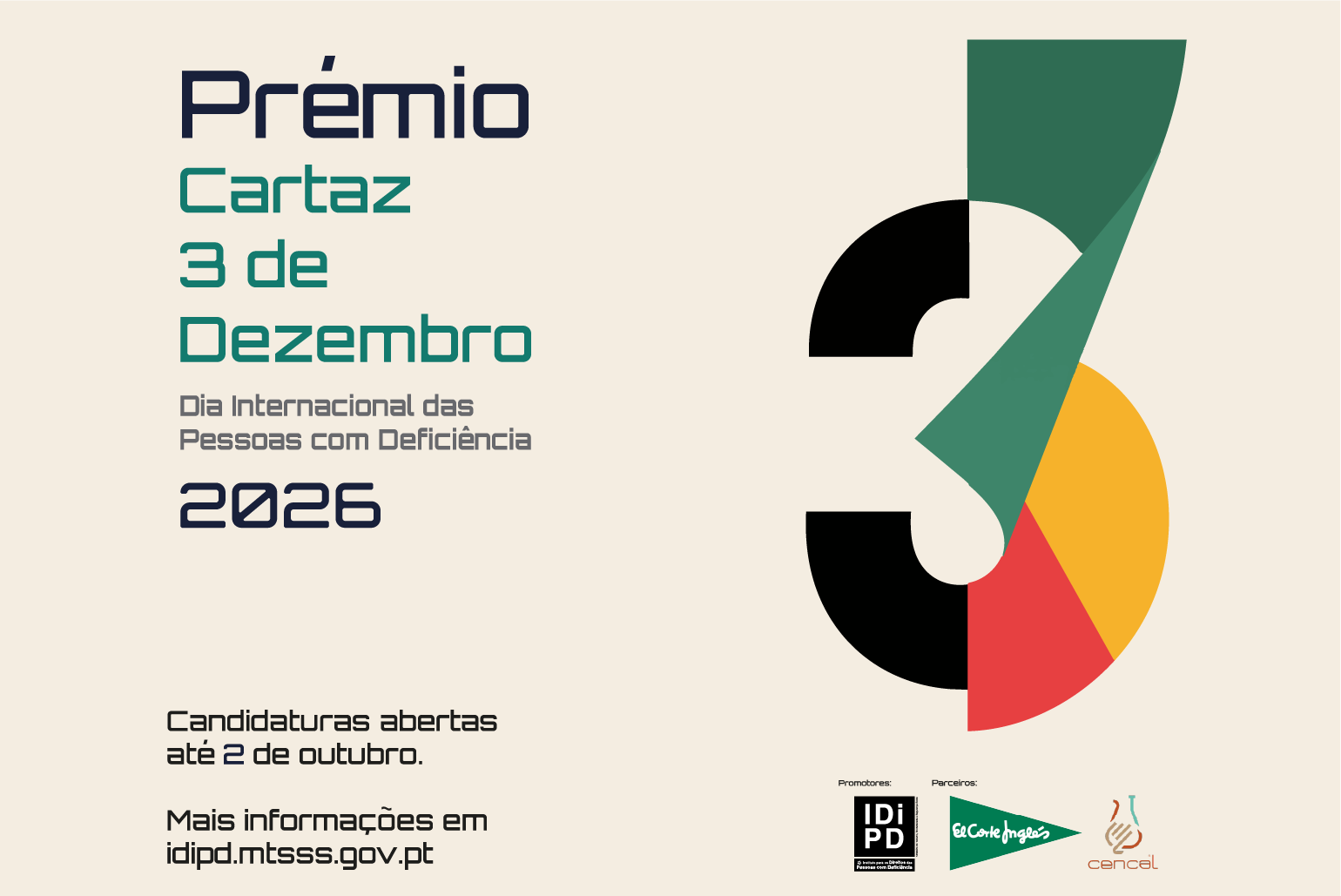
O Instituto para os Direitos das Pessoas com Deficiência, I.P. promove mais uma edição do Prémio Cartaz 3 de Dezembro, uma iniciativa que pretende distinguir o trabalho gráfico que, através de um cartaz, contribua para sensibilizar e mobilizar a opinião pública para o reconhecimento dos direitos das pessoas com deficiência. Associado ao Dia Internacional das Pessoas com Deficiência, celebrado anualmente a 3 de dezembro, o Prémio pretende valorizar a criatividade enquanto instrumento de sensibilização para a promoção dos direitos das pessoas com deficiência e para a igualdade de oportunidades e não discriminação. Candidaturas As candidaturas decorrem até 2 de outubro e estão abertas a: Pessoas singulares, maiores de 18 anos; Pessoas coletivas, sediadas em Portugal. Os trabalhos podem ser apresentados em coautoria, sendo que cada pessoa (individual ou coletiva) pode apresentar até três trabalhos. Os trabalhos apresentados devem abordar o tema “3 de Dezembro – Dia Internacional das Pessoas com Deficiência”, sendo avaliados tendo em consideração critérios como a criatividade, o mérito artístico e a adequação ao tema. Os restantes requisitos relativos aos trabalhos e à apresentação das candidaturas encontram-se disponíveis no respetivo Regulamento do Prémio . Prémios O trabalho vencedor será distinguido com um prémio no valor de 1 500 euros, atribuído pelo Instituto para os Direitos das Pessoas com Deficiência, I.P., e com um voucher no valor de 1 500 euros, oferecido pelo El Corte Inglés . O vencedor, assim como os cartazes distinguidos com Menção Honrosa, receberão também uma peça de arte oferecida pelo CENCAL – Centro de Formação Profissional para a Indústria Cerâmica. Júri A avaliação dos trabalhos estará a cargo de um júri constituído por: Pedro Afonso, presidente do júri e representante do Instituto para os Direitos das Pessoas com Deficiência, I.P.; Helena Vaz da Silva, representante da Fundação Calouste Gulbenkian, enquanto entidade com fins artísticos, culturais e educativos; Alice Inácio, designer e representante da Confederação Nacional de Organizações de Pessoas com Deficiência; Ricardo Galvão, cartoonista e ilustrador, personalidade ligada ao design, à criatividade e à imagem; Joana Raminhos da Silveira, ilustradora, autora e investigadora na área do Multimédia em Educação, personalidade ligada ao design, à criatividade e à imagem; Daniela Gomes, especialista convidada pelo júri ligada ao design, à criatividade e à imagem. Como se pode candidatar? As candidaturas devem ser obrigatoriamente submetidas através do preenchimento do Formulário de candidatura Consulte o Regulamento Prémio Cartaz 3 dezembro para informações sobre os requisitos a cumprir. Para esclarecimentos adicionais, contacte idipd@idipd.mtsss.gov.pt O Prémio Cartaz 3 de Dezembro conta com o apoio do El Corte Inglés e do CENCAL – Centro de Formação Profissional para a Indústria Cerâmica . Documentos: Regulamento Prémio Cartaz 3 dezembro Constituição do Júri - Prémio Cartaz 3 de Dezembro 2026 Ponderações dos Critérios de Avaliação - Prémio Cartaz 3 de Dezembro 2026 Perguntas Fequentes - Prémio Cartaz 3 de Dezembro 2026
Ver detalhes do destaque Prémio Praia + Acessível 2026 – período de candidaturas
Está a decorrer, até 30 de setembro, o período de apresentação de candidaturas ao Prémio Praia + Acessível 2026 . Este prémio distingue, em cada época balnear, as zonas balneares galardoadas pelo Programa Praia Acessível, Praia para Todos! cujas candidaturas evidenciem ter proporcionado às pessoas com mobilidade condicionada melhores condições de acessibilidade e qualidade dos serviços prestados para uma melhor fruição destes espaços de lazer. Neste âmbito, será atribuído um prémio à praia melhor pontuada em cada uma das seguintes tipologias: praia costeira ou de transição praia interior Na presente época balnear verificou-se uma notável adesão a este Programa que distinguiu 239 zonas balneares. Com esta iniciativa pretende-se estimular a implementação de boas práticas que constituam claras mais-valias ao nível da inovação, abrangência e qualidade das condições de acessibilidade e apoios disponibilizados, bem como uma comunicação ao público consistente e eficaz da oferta proporcionada. O prémio, que anualmente atribui equipamentos de apoio ao banho, é patrocinado pela empresa IACESS . Para mais informação, e acesso ao regulamento e ao formulário de candidatura ao Prémio, consultar as páginas eletrónicas dos promotores: IDiPD , APA e TP
Ver detalhes do destaque 
Rede Balcão da Inclusão: Reuniões para Implementação com Municípios de Caminha, Sintra e Cascais
O Instituto para os Direitos das Pessoas com Deficiência, I.P., IDiPD, realizou recentemente reuniões de trabalho com os Municípios de Caminha, Sintra e Cascais, com o objetivo de promover a implementação de Balcões da Inclusão nestes territórios. Estas reuniões permitiram apresentar o modelo de funcionamento desta resposta de proximidade, reforçando a importância do acesso à informação, encaminhamento e apoio às pessoas com deficiência e respetivas famílias, através de estruturas mais próximas dos cidadãos. No decurso das reuniões, foi igualmente apresentado o projeto Espaço Família, uma medida integrada no Plano de Ação da Estratégia Única dos Direitos das Crianças e Jovens 2025-2030 , concebida como um projeto-piloto que poderá ser desenvolvido nos Balcões da Inclusão dos Municípios que manifestem interesse na sua implementação. A iniciativa foi bem acolhida pelos municípios participantes, que manifestaram interesse em aprofundar o conhecimento sobre o projeto e analisar a sua concretização a nível local, reconhecendo o potencial desta resposta para reforçar o apoio às famílias e promover uma abordagem mais integrada às necessidades das crianças e dos jovens.
Ver detalhes do destaque 49 anos a promover os direitos das pessoas com deficiência: Rede de Balcões Inclusão - informação, orientação e proximidade ao serviço das pessoas com deficiência
No âmbito da missão de promoção e defesa dos direitos das pessoas com deficiência, o Instituto para os Direitos das Pessoas com Deficiência, I.P. (IDiPD), tem vindo a reforçar a importância de uma resposta pública de proximidade, acessível e centrada nas necessidades de cada pessoa. É neste contexto que se insere a Rede de Balcões da Inclusão, um serviço de atendimento especializado destinado às pessoas com deficiência e às suas famílias, que assegura informação, orientação e encaminhamento sobre direitos, medidas de apoio, recursos, serviços e respostas disponíveis. Procura proporcionar um atendimento qualificado e próximo, contribuindo para que cada pessoa possa conhecer os seus direitos, identificar os recursos existentes e encontrar os percursos adequados para aceder às respostas de que necessita. A construção de uma Rede de referência nacional na prestação de serviços públicos inclusivos exige um compromisso permanente com a melhoria da qualidade do atendimento. Exige também cooperação entre entidades, partilha de conhecimento e capacidade de acompanhar a evolução das necessidades das pessoas com deficiência e suas famílias. Ao assinalar o 49.º aniversário, o Instituto reafirma o compromisso com o desenvolvimento de serviços públicos cada vez mais acessíveis, inclusivos e centrados na pessoa. Mais informações sobre o Balcão da Inclusão, AQUI . #49anosafazeracontecer #pelosdireitosdaspessoascomdeficiência
Ver detalhes do destaque 

49 anos a promover os direitos das pessoas com deficiência: Estratégia para os Direitos das Pessoas com Deficiência 2026-2030 (EDPD 2026-2030)
No ano em que assinala 49 anos de percurso, o Instituto dos Direitos das Pessoas com Deficiência, I.P. (IDiPD), assume um novo ciclo de trabalho com a implementação da Estratégia para os Direitos das Pessoas com Deficiência 2026-2030 (EDPD 2026-2030). Aprovada pela Resolução do Conselho de Ministros n.º 64-A/2026, de 31 de março, a Estratégia estabelece um quadro de intervenção para garantir que as pessoas com deficiência possam exercer plenamente os seus direitos, viver de forma autónoma e participar ativamente na vida social, económica, política e cultural, em condições de igualdade de oportunidades e com respeito pela diversidade e pela dignidade humana. A EDPD 2026-2030 estrutura-se em 5 áreas-chave e um eixo transversal – Territórios, Cidadania, Educação, Emprego e Formação, Saúde e Eixo Transversal (Governação, Dados e Participação Social) – e concretiza-se através de planos de ação com medidas a implementar ao longo dos próximos cinco anos (2026-2030). Enquanto entidade coordenadora da Estratégia, o IDiPD assume a responsabilidade de promover a articulação entre as diferentes áreas governativas, acompanhar a execução das medidas, implementar o sistema de monitorização e coordenar os processos de avaliação da Estratégia: Coordenar: articulação entre áreas governativas Articular: trabalho conjunto com as entidades responsáveis Monitorizar: acompanhar a execução das medidas Avaliar: acompanhar a evolução da Estratégia A implementação já está em curso. Em 2026, encontram-se em desenvolvimento iniciativas que abrangem, entre outras, a promoção da participação das pessoas com deficiência na proteção civil, a criação de referenciais de formação para uma Administração Pública mais inclusiva, a promoção do CATL Inclusivo, o reforço dos mecanismos de emprego e o desenvolvimento de um sistema de informação em parceria com o Instituto de Informática, I.P.. Mais informações em: Resolução do Conselho de Ministros n.º 64-A/2026, de 31 de março , que aprova a Estratégia para os Direitos das Pessoas com Deficiência 2026-2030; Resolução do Conselho de Ministros n.º 64-B/2026, de 31 de março , que aprova os Planos de Ação da Estratégia para os Direitos das Pessoas com Deficiência 2026-2030. #49anosafazeracontecer #pelosdireitosdaspessoascomdeficiência
Ver detalhes do destaque Comissão Europeia avalia aplicação das regras europeias sobre igualdade e não discriminação
A Comissão Europeia publicou, em 13 de julho de 2026, o relatório sobre a aplicação da Diretiva Igualdade Racial (2000/43/CE) e da Diretiva Igualdade no Emprego (2000/78/CE), que estabelece um quadro geral de igualdade de tratamento no emprego e na atividade profissional, incluindo em razão da deficiência. O Relatório reconhece os progressos alcançados no reforço do quadro jurídico europeu, mas alerta para desafios persistentes na concretização efetiva do direito à igualdade, nomeadamente a subnotificação da discriminação, as dificuldades de acesso à justiça e a necessidade de assegurar mecanismos de proteção e sanções eficazes. Um dos dados destacados pela Comissão revela que apenas 5 % a 11 % das vítimas de discriminação apresentam uma denúncia formal, evidenciando a importância de reforçar o conhecimento dos direitos e o acesso aos mecanismos de proteção. No domínio da deficiência, o Relatório destaca desenvolvimentos recentes da jurisprudência do Tribunal de Justiça da União Europeia, designadamente em matéria de discriminação por associação e adaptações relacionadas com a deficiência. A Comissão dedica ainda particular atenção aos novos desafios associados à inteligência artificial, alertando para o risco de discriminação algorítmica em áreas como o recrutamento, o acesso ao emprego e a prestação de serviços. O Relatório sublinha, assim, a necessidade de continuar a reforçar os organismos para a igualdade, a recolha e utilização de dados, o acesso à justiça e a capacidade de prevenir e combater formas estruturais e emergentes de discriminação. O Relatório pode ser consultado, AQUI .
Ver detalhes do destaque 

49 anos a promover os direitos das pessoas com deficiência: a inclusão, a acessibilidade e a participação de todas as pessoas
Ao longo de quase cinco décadas, o Instituto para os Direitos das Pessoas com Deficiência (IDiPD) tem contribuído para uma sociedade mais inclusiva, promovendo a igualdade de oportunidades, a acessibilidade e a participação plena das pessoas com deficiência em todas as áreas da vida. Entre as iniciativas mais emblemáticas, destaca-se o Concurso Escola Alerta! , que se prepara para a sua 23.ª edição. Desde o ano letivo 2003/2004, tem mobilizado dezenas de milhares de alunos e milhares professores, desafiando à reflexão, identificando barreiras à participação das pessoas com deficiência e incentivando a apresentação de soluções que promovam a inclusão e a cidadania. A reformulação de 2024, permitiu alargar a participação de crianças e jovens, desde a educação pré-escolar até ao ensino secundário, reforçando a dimensão educativa e o impacto na sensibilização para a acessibilidade. Porque aprender a reconhecer obstáculos e a procurar soluções é também aprender a participar, a respeitar a diferença e a construir uma sociedade mais inclusiva. O direito ao lazer, à cultura e à participação na vida social é um direito de todas as pessoas, e a promoção da acessibilidade estende-se também às zonas balneares, através do programa Praia Acessível – Praia para Todos! , desenvolvido em parceria com o Turismo de Portugal e a Agência Portuguesa do Ambiente. Esta iniciativa procura garantir que todas as pessoas possam usufruir das praias com autonomia, segurança e dignidade, desde o acesso aos areais até à utilização dos equipamentos e serviços disponíveis. O compromisso com esta área é igualmente reconhecido através do Prémio Praia + Acessível , que distingue boas práticas e projetos inovadores desenvolvidos por municípios e entidades gestoras de praias acessíveis. Acessibilidade é também participar na cultura. O trabalho desenvolvido no âmbito dos Festivais Acessíveis , em parceria com o Turismo de Portugal, e do Selo - Espaços Culturais Acessíveis e Inclusivos (SECAI) tem contribuído para incentivar a criação de condições para que todas as pessoas possam usufruir plenamente da vida cultural, reconhecendo que a cultura só é verdadeiramente inclusiva quando ninguém fica de fora. O compromisso do Instituto reflete-se ainda no conjunto de prémios promovidos, que valorizam a educação, a investigação, a inovação tecnológica, a acessibilidade e a participação social. Destacam-se o Prémio Ciências Sociais e Humanas para a Inclusão , que visa reconhecer e valorizar trabalhos académicos e científicos que promovam a inclusão de pessoas com deficiência; o Prémio de Inovação Tecnológica Engenheiro Jaime Filipe , que distingue invenções, projetos ou produtos tecnológicos inovadores que contribuam para a melhoria da qualidade de vida das pessoas com deficiência; o Prémio Cartaz 3 de Dezembro - Dia Internacional das Pessoas com Deficiência , que distingue o trabalho gráfico que sensibilize e mobilize a opinião pública para o reconhecimento dos direitos das pessoas com deficiência; e o Prémio Desporto + Acessível , promovido em parceria com o Instituto Português do Desporto e Juventude, que distingue projetos que promovam o desenvolvimento do desporto e da atividade física para pessoas com deficiência, com vista à sua inclusão social. Durante estes 49 anos, o percurso do Instituto continua a demonstrar que construir uma sociedade mais justa e inclusiva implica atuar em diversas áreas da vida, da escola ao lazer, da cultura ao desporto, da investigação à inovação, sempre com o objetivo de garantir que todas as pessoas possam participar plenamente em igualdade de direitos e oportunidades. # 49anosafazeracontecer # direitospessoasdeficiência
Ver detalhes do destaque 49 anos a promover os direitos das pessoas com deficiência: as ONGPD enquanto parceiras estratégicas
Ao longo dos seus 49 anos, o atual Instituto para os Direitos das Pessoas com Deficiência, I.P. (IDiPD) tem desenvolvido a sua missão em estreita colaboração com as Organizações Não Governamentais das Pessoas com Deficiência (ONGPD) , reconhecendo nelas parceiros fundamentais na construção de uma sociedade mais inclusiva e acessível. As ONGPD desempenham um papel determinante na participação das pessoas com deficiência, atuando diariamente junto das comunidades, contribuindo para a identificação de necessidades, pela promoção dos direitos das pessoas com deficiência e das suas famílias. Com âmbito de atuação nacional, regional ou local, as ONGPD asseguram uma ligação próxima às realidades concretas das pessoas que representam. O Instituto tem procurado reforçar a cooperação com este movimento associativo, reconhecendo o seu papel essencial na promoção dos direitos humanos e da cidadania das pessoas com deficiência. Para além do Apoio ao Funcionamento das organizações de âmbito nacional, desenvolvemos o Programa de Financiamento a Projetos que estabelece as condições de acesso, atribuição e execução do apoio financeiro concedido pelo Instituto às ONGPD. São apoiados projetos que promovem os direitos das pessoas com deficiência e contribuem para a sua participação na sociedade, em consonância com os princípios da Convenção sobre os Direitos das Pessoas com Deficiência. Mais do que um instrumento financeiro, estes apoios constituem uma expressão concreta de uma política pública construída em parceria. O suporte à capacidade de intervenção das ONGPD possibilita o desenvolvimento de iniciativas próximas das pessoas, e dos seus contextos de vida, dando espaço à inovação, à participação e à procura de respostas para os desafios que persistem. Cada projeto apoiado representa uma oportunidade para transformar ideias em respostas, identificar novas soluções e criar condições para que mais pessoas possam exercer os seus direitos e participar plenamente na sociedade. Neste 49.º aniversário, o IDiPD reforça a importância destas parcerias estratégicas que têm sido essenciais para promover as melhores práticas, partilhar conhecimento, desenvolver projetos e sensibilizar a sociedade para uma cultura de direitos e de participação plena de todas as pessoas. O presente também se desenvolve em parceria! # 49anosafazeracontecer #direitospessoasdeficiência
Ver detalhes do destaque 

49 anos a promover os direitos das pessoas com deficiência: a nossa história
O Secretariado Nacional para a Reabilitação (SNR) , previsto no n.º 2 da Base VI da Lei n.º 6/71, de 28 de fevereiro, que estabeleceu as bases da reabilitação e integração social das pessoas com deficiência, foi criado, na Presidência do Conselho de Ministros, em 20 de agosto de 1977 pelo Decreto-Lei n.º 346/77 . Desde a sua origem, teve como missão constituir -se como instrumento do Estado para a implementação de uma política nacional de habilitação, reabilitação e integração social das pessoas com deficiência, promovendo e coordenando intervenções nos domínios da saúde, educação, formação profissional, emprego e inclusão social , alinhada co m a Constituição da República Portuguesa . Quarenta e nove anos depois, a realidade das pessoas com deficiência, das suas famílias, das organizações representativas e da própria sociedade portuguesa é profundamente diferente da que existia em 1977. Os progressos alcançados foram significativos e resultam do empenho coletivo, que contribuiu para a construção de uma sociedade mais equitativa e próxima . Neste percurso, importa reconhecer e agradecer o papel desempenhado pelos trabalhadores e dirigentes que passaram por este serviço público, nas suas diferentes estruturas orgânicas , desde o SNR , passando pelo Secretariado Nacional para a Reabilitação e Integração das Pessoas com Deficiência e pelo Instituto Nacional para a Reabilitação, I.P., até ao atual Instituto para os Direitos das Pessoas com Deficiência, I.P. ( IDiPD ) . Merecem igualmente destaque, a s próprias pessoas com deficiência, as suas famílias e as Organizações Representativas das Pessoas com Deficiência (ONGPD) , verdadeiras protagonistas das transformações alcançadas. A evolução dos direitos, das políticas públicas e das medidas de apoio permitiram consolidar importantes conquistas e criar condições para a afirmação de instrumentos fundamentais, a nível nacional e internacional, destacando -se as Estratégias (Instrumentos programáticos da política pública) e a Convenção sobre os Direitos das Pessoas com Deficiência , da Organização das Nações Unidas (ONU). Hoje, no dia em que celebramos o aniversário do IDiPD , olhamos a nossa história, com o sentido posto na cooperação e no compromisso que todos os dias nos fazem dar o melhor para cumprir a missão. A atual missão do Instituto , de promover e implementar políticas públicas nacionais e internacionais orientadas para a efetivação dos direitos das pessoas com deficiência, das suas famílias e das organizações representativas , constitui uma garantia de continuidade deste compromisso. No presente e no futuro, com empenho, participação e responsabilidade, o IDiPD prossegue o caminho de promoção dos direitos, da inclusão e da plena cidadania das pessoas com deficiência. Muito obrigada pelo vosso contributo! # 49anosafazeracontecer #direitospessoasdeficiência
Ver detalhes do destaque IDiPD, I.P. promove ação de sensibilização «Autorrepresentação e Self Advocacy na Promoção dos Direitos das Pessoas com Deficiência»
O Instituto para os Direitos das Pessoas com Deficiência, I.P. (IDiPD, I.P.) promove a ação de sensibilização « Autorrepresentação e Self Advocacy na Promoção dos Direitos das Pessoas com Deficiência », que irá decorrer nos próximos dias 15 e 17 de setembro. Integrada na área temática Promoção dos Direitos, a ação tem uma duração total de 4 horas e decorrerá online , através da plataforma Teams , entre as 14h30 e as 16h30, nos dois dias de formação. A iniciativa pretende promover a reflexão em torno dos conceitos de autorrepresentação e self advocacy , reconhecendo a importância da participação das pessoas com deficiência na promoção dos seus direitos e do conhecimento dos instrumentos de direito nacional e internacional relevantes para a regulação desses direitos. Entre os conteúdos a abordar encontram-se o enquadramento histórico dos movimentos nacionais e internacionais de autorrepresentação e as suas implicações na conjuntura atual, assim como a Convenção sobre os Direitos das Pessoas com Deficiência, nomeadamente os direitos e deveres nela consagrados. A ação destina-se a pessoas com deficiência e suas famílias, bem como a dirigentes e profissionais das Organizações Não Governamentais das Pessoas com Deficiência (ONGPD). A formação será dinamizada por Rodrigo Santos, jurista , dirigente na Administração Pública e Presidente da Direção Nacional da ACAPO - Associação dos Cegos e Amblíopes de Portugal. A participação é gratuita, estando limitada a um máximo de 20 participantes. As inscrições já se encontram abertas e podem ser efetuadas através do formulário de inscrição , no site do IDiPD, I.P . Para mais informações sobre esta ou outras ações de formação, entre em contacto connosco: idipd@idipd.mtsss.gov.pt
Ver detalhes do destaque 
Regime jurídico reforça direitos no ensino superior e altera o Decreto-Lei n.º 163/2006 sobre a acessibilidade em edificado
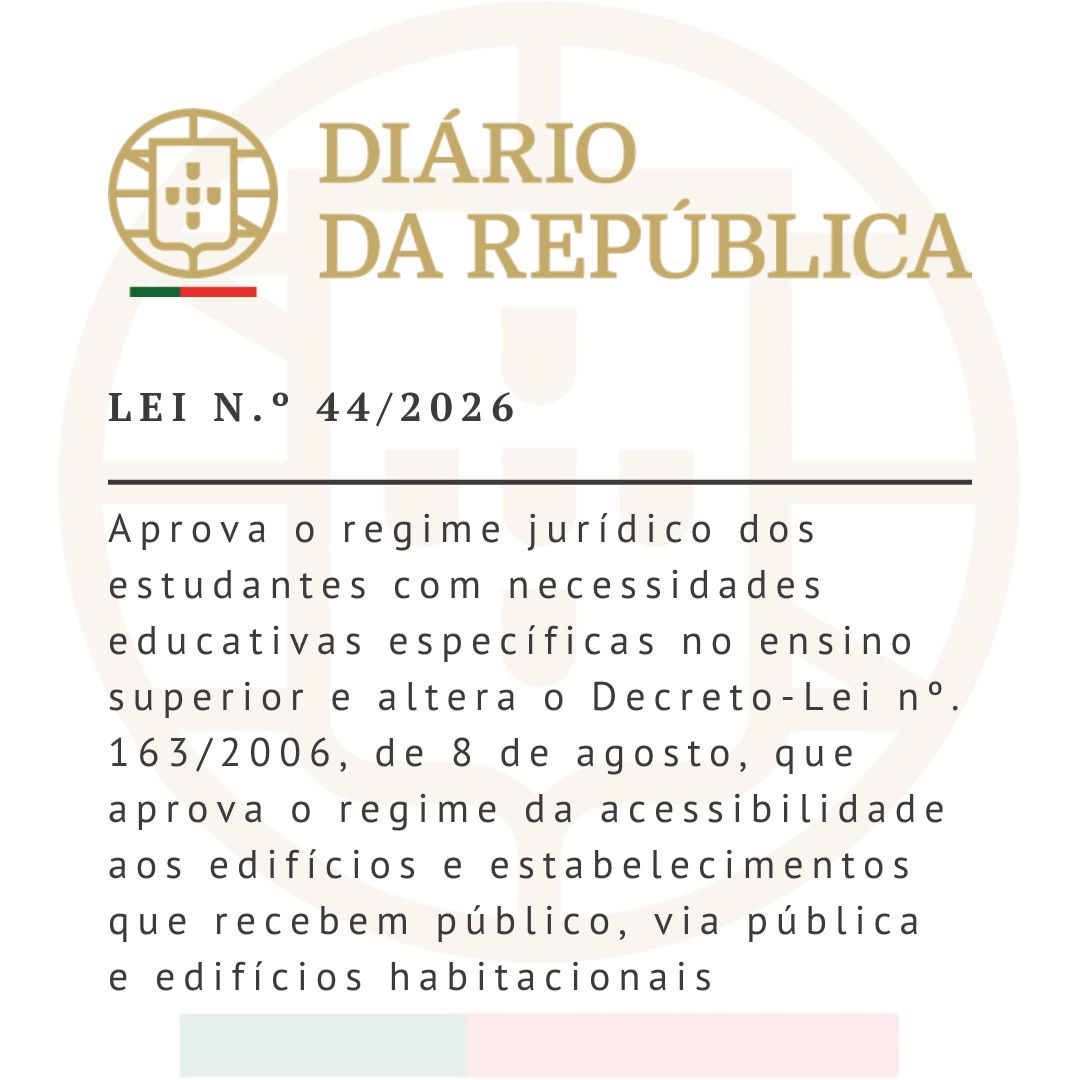
Foi publicada a Lei n.º 44/2026, de 10 de agosto, que aprova o novo regime jurídico dos estudantes com necessidades educativas específicas no ensino superior, contribuindo para a promoção dos seus direitos, da equidade, da acessibilidade e da inclusão académica. A Lei procede também à alteração ao Decreto-Lei n.º 163/2006, de 8 de agosto, que aprova o regime da acessibilidade aos edifícios e estabelecimentos que recebem público, via pública e edifícios habitacionais, alterado pelos Decretos-Leis n.º 136/2014, de 9 de setembro, n.º 125/2017, de 4 de outubro, n.º 95/2019, de 18 de julho, e n.º 10/2024, de 8 de janeiro. Entre as principais medidas da Lei n.º 44/2026, de 10 de agosto, destaca-se: Estatuto de estudante com necessidades educativas específicas; Reforço das condições de mobilidade, de acessibilidade física, digital e comunicacional nas instituições de ensino superior; Adequação das condições de ingresso, métodos de avaliação e regimes de frequência; Prioridade no acesso ao ensino superior; Prioridade no acesso a alojamento estudantil; Mecanismo financeiro de apoio à inclusão; Estatuto especial na atribuição de bolsa de estudo; Reforço nas bolsas de estudo e de investigação para estudantes com deficiência; Acompanhamento especializado a estudantes com necessidades educativas específicas. A Lei constitui um importante contributo para um ensino superior mais equitativo, acessível e inclusivo, reforçando os direitos de alunos com deficiência e de estudantes que necessitam de medidas específicas de apoio ao seu percurso académico. Aceda na íntegra à Lei n.º 44/2026, de 10 de agosto, AQUI .
Ver detalhes do destaque RELATÓRIO MENSAL MAVI – JUNHO 2026
A atividade mensal dos Centros de Apoio à Vida Independente (CAVI), que integram o Modelo de Apoio à Vida Independente (MAVI), é reportada ao Instituto para os Direitos das Pessoas com Deficiência, I.P., tendo por base o preenchimento das grelhas de monitorização por parte de cada uma das instituições. De acordo com as referidas monitorizações, em junho de 2026, nos 35 CAVI em funcionamento, foram apoiadas 1186 pessoas financiadas pelo ISS, I.P.. Desde o início do projeto até ao dia 30 de junho de 2026, foram prestadas um total de 7.088.890 (sete milhões, oitenta e oito mil, oitocentas e noventa) horas, das quais 3.648.286 (três milhões, seiscentas e quarenta e oito mil, duzentas e oitenta e seis) horas no âmbito do ISS acumulado aos 3.440.604 (três milhões, quatrocentas e quarenta mil, seiscentas e quatro) horas de assistência pessoal prestadas no âmbito do FSE até 30 de setembro de 2023. Em suma, no mês de junho de 2026 registou-se uma diminuição do número de pessoas apoiadas em assistência pessoal face ao mês anterior. Verificou-se uma diminuição do número de horas de apoio prestadas, embora tenha aumentado o número de assistentes pessoais em funções. Observou-se um aumento do número de PIAP suspensos, dos PIAP terminados e de novos PIAP celebrados. A partir de 1 de março de 2024 começaram a ser celebrados os Acordos de Cooperação entre os CAVI e o ISS, I.P., o que permitiu que a assistência pessoal começasse a ser prestada de acordo com o disposto na Portaria n.º 415/2023, de 7 de dezembro. A 1 de janeiro de 2025, todos os 35 CAVI tinham assinado o Acordo de Cooperação com o ISS, I.P..
Ver detalhes do destaque 
Programa Ibero-Americano para a Deficiência promove nova edição de formação sobre acesso à justiça
No âmbito da participação de Portugal no Programa Ibero-Americano para a Deficiência (PID), representado pelo Instituto para os Direitos das Pessoas com Deficiência, I.P. (IDIPD), divulga-se a nova edição da ação de formação 'Acesso à Justiça das Pessoas com Deficiência', promovida pelo PID com o objetivo de reforçar as competências dos profissionais da área da justiça na promoção e garantia dos direitos das pessoas com deficiência. Esta iniciativa visa reforçar as competências dos profissionais da justiça na promoção do acesso à justiça das pessoas com deficiência, através do aprofundamento do conhecimento dos instrumentos internacionais de direitos humanos e da divulgação de normas e boas práticas que contribuam para uma justiça mais acessível, inclusiva e baseada nos direitos humanos. A formação destina-se a magistrados, oficiais de justiça, juristas, advogados, solicitadores, agentes de execução, conservadores, notários, técnicos superiores da Administração Pública e outros profissionais que exerçam funções nas áreas jurídicas dos países participantes no Programa, incluindo Portugal. A ação decorrerá em regime virtual assíncrono, entre 15 de setembro e 30 de novembro de 2026, terá uma duração total de 40 horas, será ministrada em Espanhol e em Gesto Internacional, através da plataforma educativa da editora jurídica Tirant Lo Blanch. As inscrições encontram-se abertas até 31 de agosto de 2026. O IDiPD incentiva a participação dos seus juristas e restantes técnicos superiores, bem como dos profissionais do Ministério do Trabalho, Solidariedade e Segurança Social e do Ministério da Justiça, considerando que esta ação constitui uma oportunidade para reforçar competências em matéria de direitos das pessoas com deficiência e promover uma justiça mais acessível e inclusiva. O programa completo do curso pode ser consultado AQUI e as inscrições devem ser efetuadas através deste formulário . Para mais informações, as pessoas interessadas poderão contactar a organização do curso pelo e-mail unidad.tecnica@programaiberoamericanodediscapacidad.org ou através do sítio da Internet do PID .
Ver detalhes do destaque 10.ª edição do Programa de Capacitação em Direitos Humanos para a Administração Pública
O Instituto Nacional de Administração (INA) promove, entre 22 de setembro e 19 de novembro, a 10ª edição do Programa de Capacitação em Direitos Humanos para a Administração Pública. Com o objetivo de promover os direitos humanos e os direitos fundamentais nos serviços públicos portugueses, o programa é dirigido a trabalhadores/as e dirigentes da Administração Pública e inclui: ✔️ Curso em e-learning, de frequência gratuita ✔️ Organizado em 4 módulos e 2 webinares ✔️ Total de 30 horas de formação síncrona ✔️ Limite de 60 participantes por edição O IDiPD, I. P. estará também representado nesta edição, assegurando a dinamização de uma componente da formação. As inscrições e todas as informações sobre o programa, incluindo a calendarização, podem ser consultadas Aqui .
Ver detalhes do destaque 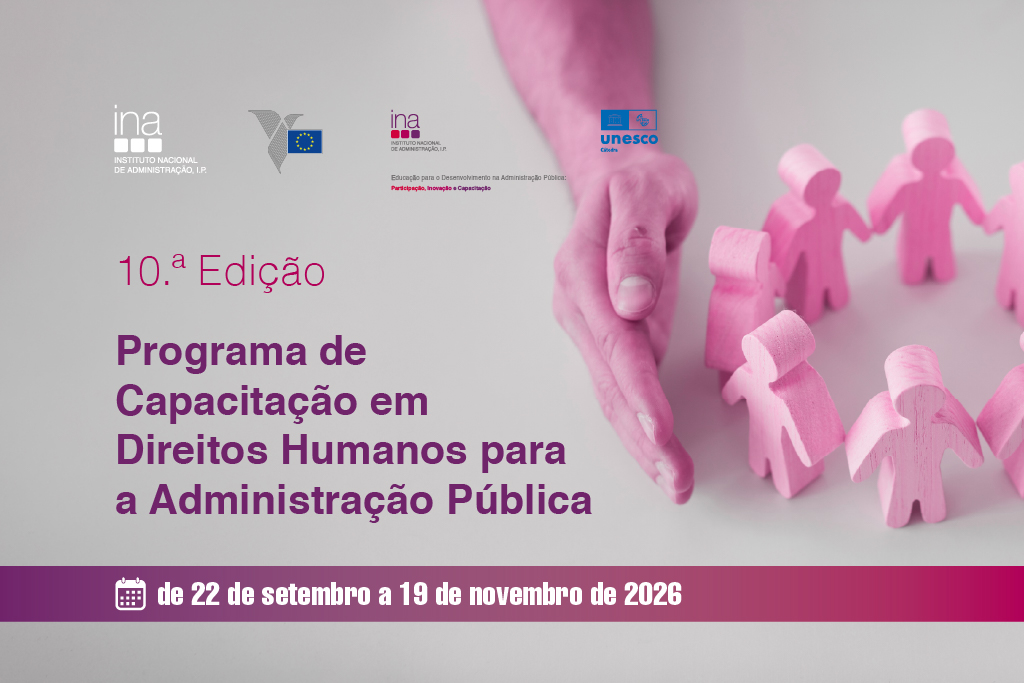
Acesso rápido a: